कुंडलीतला राजयोग, आणि राजयोग कॅल्क्युलेटर काय सांगू शकत नाही
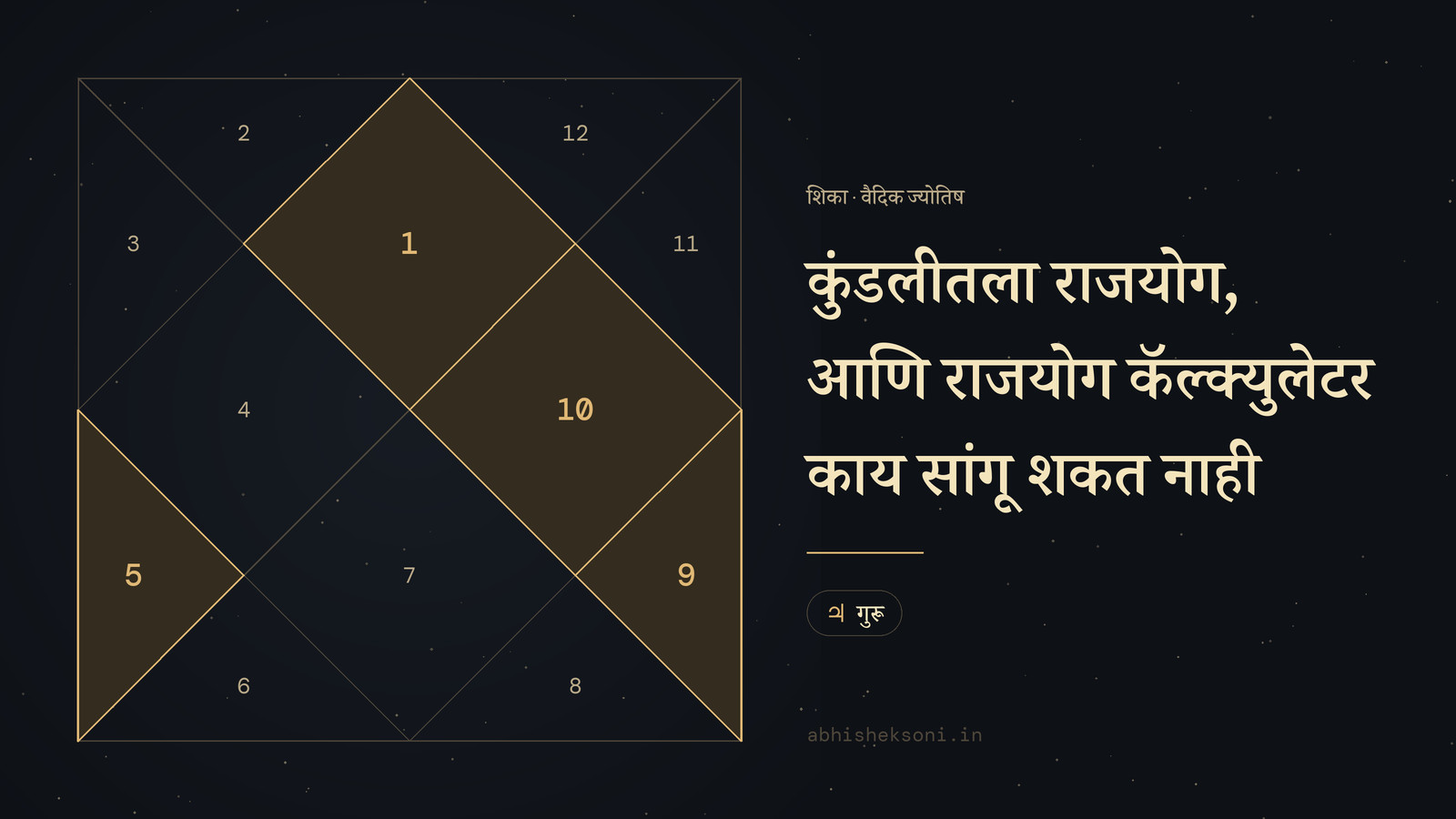
कुंडलीत केंद्र घराचा स्वामी आणि त्रिकोण घराचा स्वामी एकत्र आले की राजयोग बनतो. एकत्र येणं म्हणजे एकाच घरात बसणं, एकमेकांवर दृष्टी टाकणं, किंवा एकमेकांच्या जागा बदलणं. जवळपास प्रत्येक पत्रिकेत असा किमान एक योग असतो, आणि हीच गोष्ट बहुतेक राजयोग कॅल्क्युलेटर सांगायचं काळजीपूर्वक टाळतात.
याचा अर्थ रस सोडून द्यावा असा नाही. याचा अर्थ दुसरा प्रश्न विचारावा, जो खरं तर महत्त्वाचा आहे: तो योग किती बलवान आहे, तो कुठे बसलाय, आणि तो कधी काम करणार आहे. कॅल्क्युलेटर पहिल्या प्रश्नाचं उत्तर देऊ शकतो, की योग आहे. बाकी तीन प्रश्नांचं उत्तर तो देऊ शकत नाही, आणि ते तीन प्रश्न म्हणजेच वाचन.
राजयोग म्हणजे काय
कुंडलीतली बारा घरं काही गटांमध्ये येतात. केंद्र म्हणजे पहिलं, चौथं, सातवं आणि दहावं घर. ते पत्रिकेचे खांब आहेत, आणि त्यांचा संबंध स्वतःशी, घराशी, जोडीदाराशी आणि कामाशी जोडला जातो. त्रिकोण म्हणजे पहिलं, पाचवं आणि नववं घर, आणि त्यांचा संबंध स्वतःशी, बुद्धीशी आणि भाग्याशी जोडला जातो.
परंपरा असं मानते की केंद्राचा स्वामी आणि त्रिकोणाचा स्वामी जोडले गेले की क्षमता आणि संधी एकत्र येतात, आणि आयुष्यात वर येण्याचा योग बनतो. हा शब्द तयार झाला तेव्हा राजा म्हणजे खरंच राजा, आणि जुनी वर्णनं दरबारासाठी लिहिलेली आहेत. आज वाचताना त्याचा समजूतदार अर्थ मान, अधिकार, आणि एखादं पद सांभाळण्याची क्षमता असा होतो, सिंहासन नाही.
काही योग असे आहेत जे लोक नावानं शोधतात. गजकेसरी, जो चंद्रापासून केंद्रात गुरू असताना बनतो. धनयोग, जे दुसऱ्या आणि अकराव्या घरांच्या आणि त्यांच्या स्वामींच्या संबंधांतून बनतात. पंच महापुरुष योग, जे मंगळ, बुध, गुरू, शुक्र किंवा शनी बलवान असून केंद्रात असताना बनतात. नावं वेगळी, पण मागचं तर्कशास्त्र एकच: पत्रिकेचे दोन भाग अशा प्रकारे जोडलेले, ज्याला परंपरा फलदायी मानते.
कॅल्क्युलेटर सगळ्यांनाच चांगली बातमी का देतो
कॅल्क्युलेटर एकच गोष्ट करतो. तो घरांचे स्वामी काढतो, त्यातले कोण कोणाशी जोडलेले आहेत ते बघतो, ते एका यादीशी जुळवतो, आणि जे सापडलं ते छापतो. जवळपास प्रत्येक पत्रिकेत त्याला काहीतरी सापडतंच, कारण बारा घरं आणि नऊ ग्रह असताना कुठला ना कुठला केंद्राचा स्वामी कुठल्या ना कुठल्या त्रिकोणाच्या स्वामीशी जोडलेला असतोच.
म्हणून तुम्हाला राजयोग आहे असं सांगणाऱ्या राजयोग कॅल्क्युलेटरनं तुम्हाला फार थोडं सांगितलंय. त्यानं हे तोललेलं नाही:
योगातले ग्रह बलवान आहेत का. दोन कमजोर, वाईट जागी बसलेल्या ग्रहांनी बनलेला योग फक्त कागदावरचा योग आहे. तोच योग दोन बलवान ग्रहांनी बनलेला असेल, तर गोष्टच वेगळी.
तो कुठल्या घरात पडतो. दहाव्या घरातला राजयोग आणि सहाव्या घरातला तोच राजयोग, एकाच आयुष्याचं वर्णन करत नाहीत. नावापेक्षा जागा अर्थ जास्त बदलते.
त्याला काही बाधा आहे का. योग असू शकतो, आणि त्याच वेळी एखाद्या पीडेनं तो पोखरलेलाही असू शकतो. यादी जुळवणारा प्रोग्राम ते बघतच नाही.
तो कधी काम करतो. हीच सगळ्यात मोठी गोष्ट आहे. पत्रिकेतला योग ही एक शक्यता आहे. परंपरा मानते की तो योग बनवणाऱ्या ग्रहांच्या मोठ्या काळात, म्हणजे त्यांची वर्षं चालू असताना, तो व्यक्त होतो, आणि त्या काळाबाहेर तुलनेनं थोडंच करतो. एखाद्या माणसाकडे मजबूत राजयोग असू शकतो आणि तो त्याला पन्नाशीत गाठू शकतो. पत्रिका असं म्हणत नाही की काहीच घडणार नाही. ती सांगते की यंत्र कधी सुरू होतं.
कॅल्क्युलेटरला यातल्या कशाबद्दलच मत नसतं, आणि त्यातले बरेचसे असे बनवलेले असतात की आधी उत्साह वाढवणारा निकाल द्यायचा आणि मग तुम्हाला एखादा रिपोर्ट विकायचा.
परंपरा खरं काय सांगते, आणि काय सांगत नाही
राजयोगाची जुनी वर्णनं उदय, पद आणि मान यांबद्दल बोलतात. ती दरबाराच्या भाषेत लिहिलेली आहेत, आणि अशा समाजात रचलेली आहेत जिथे माणसाचं स्थान बहुतेक जन्मानंच ठरत असे. शब्दशः वाचली तर ती सिंहासनाचं वचन देतात. समजुतीनं वाचली तर ती माणूस ज्या क्षेत्रात आहे त्यात वर येण्याच्या क्षमतेचं वर्णन करतात.
योग असला की मेहनत करायची गरज नाही, असं परंपरा म्हणत नाही. आजच्या काळातल्या या विषयाच्या गोष्टी इथेच सगळ्यात जास्त नुकसान करतात, कारण ज्या माणसाला सांगितलं जातं की तुझी पत्रिका यशाची हमी देते, त्याच्या हातात वाट बघत बसण्याचं कारण दिलं जातं. पत्रिका दिशा दाखवते. ती स्वतः काही करत नाही.
या सगळ्या प्रकाराच्या मर्यादांबद्दलही मी प्रामाणिक राहीन. एखाद्या आयुष्यात राजयोग व्यक्त झाला की नाही, हा निर्णय नंतर घेतला जातो, आणि यशस्वी माणसाची पत्रिका बघून त्याचं यश समजावणारा योग शोधणं फार सोपं आहे. पुढचं वाचणं हे मागचं वाचण्यापेक्षा जड आणि जास्त अनिश्चित आहे, आणि जो ज्योतिषी हे सांगत नाही तो जास्तीचं विकतोय.
त्याऐवजी काय बघायचं
या प्रश्नावर तुमच्या स्वतःच्या कुंडलीतून काहीतरी कामाचं हवं असेल, तर योगांच्या नावांच्या यादीपेक्षा तीन गोष्टी जास्त मोलाच्या आहेत.
लग्नेश बघा, म्हणजे लग्न राशीचा स्वामी: तो कुठे बसलाय आणि किती चांगल्या स्थितीत. ही एक जागा वाचनात बहुतेक नावाजलेल्या योगांपेक्षा जास्त काम करते.
प्रश्न करिअर आणि मानाचा असेल तर दहावं घर आणि त्याचा स्वामी बघा, आणि प्रश्न आधार आणि भाग्याचा असेल तर नववं घर. त्यांना काय जोडतं, तिथेच खरा राजयोग सापडेल, जर तो असेल तर.
आत्ता काय चालू आहे ते बघा. ग्रहांच्या मोठ्या काळांचा क्रमच स्थिर पत्रिकेला काळाच्या रेषेत बदलतो, आणि कॅल्क्युलेटरचा आनंदी सारांश या भागाला कधीच हात लावत नाही. वेळेबद्दल काहीच न सांगणाऱ्या वाचनानं तुम्हाला वापरता येईल असं काहीच सांगितलेलं नाही.
फुकट कुंडली तुम्हाला बघायला पत्रिका देईल. त्यात जे आहे ते तोलणं हे योग्य वाचनाचं काम आहे, आणि एखादं लेबल काढून तुमचं अभिनंदन करणाऱ्या पानापेक्षा ते वेगळं आहे. ज्या योगाला उलट्या, विनाकारण घाबरवणाऱ्या पद्धतीनं सांगितलं जातं त्याबद्दलच्या अशाच एका दुरुस्तीसाठी, विष योग हे पान बघा.
लोक जे विचारतात
राजयोग म्हणजे मी श्रीमंत किंवा प्रसिद्ध होणार का?
नाही. परंपरा त्याला मानात वर येण्याची क्षमता मानते, जी माणूस प्रत्यक्ष जे काम करतो त्यातून व्यक्त होते, आणि तीही फक्त त्या योगाला जागं करणाऱ्या काळात. पत्रिका एक कल दाखवते. ती निकालाचं वचन देत नाही, आणि निकालाचं वचन देणारी पत्रिका तुम्हाला कोणी विकत असेल, तर तो काहीतरी दुसरंच विकतोय.
एका पत्रिकेत किती राजयोग असतात?
बहुतेक वेळा अनेक, कारण व्याख्या मोठी आहे आणि केंद्र आणि त्रिकोणाच्या स्वामींमधले संबंध सर्रास असतात. संख्या हा कामाचा आकडा नाही. तुम्ही आत्ता जगत असलेल्या काळात सक्रिय असलेला एक बलवान, चांगल्या जागी बसलेला योग, यादीतल्या दहा कमजोर योगांपेक्षा जास्त मोलाचा आहे.
राजयोग कॅल्क्युलेटर बरोबर असतो का?
हिशोब साधारणपणे बरोबर असतो: तो घरांचे स्वामी ओळखेल आणि त्यांचे संबंध शोधेल. तो जे करू शकत नाही ते म्हणजे बळ, जागा, बाधा आणि वेळ यांचा विचार, आणि खरा अर्थ तिथेच असतो. त्याचा निकाल उत्तर म्हणून नाही, तर एका प्रश्नाची सुरुवात म्हणून घ्या.
स्रोत
- Raja yoga (Hindu astrology), विकिपीडिया
- बृहत्पाराशर होराशास्त्र, हिंदी टीका सहित, Internet Archive
- गुरू ग्रह, विकिपीडिया