कुंडली में पैसा: कौन से घर और ग्रह पढ़े जाते हैं
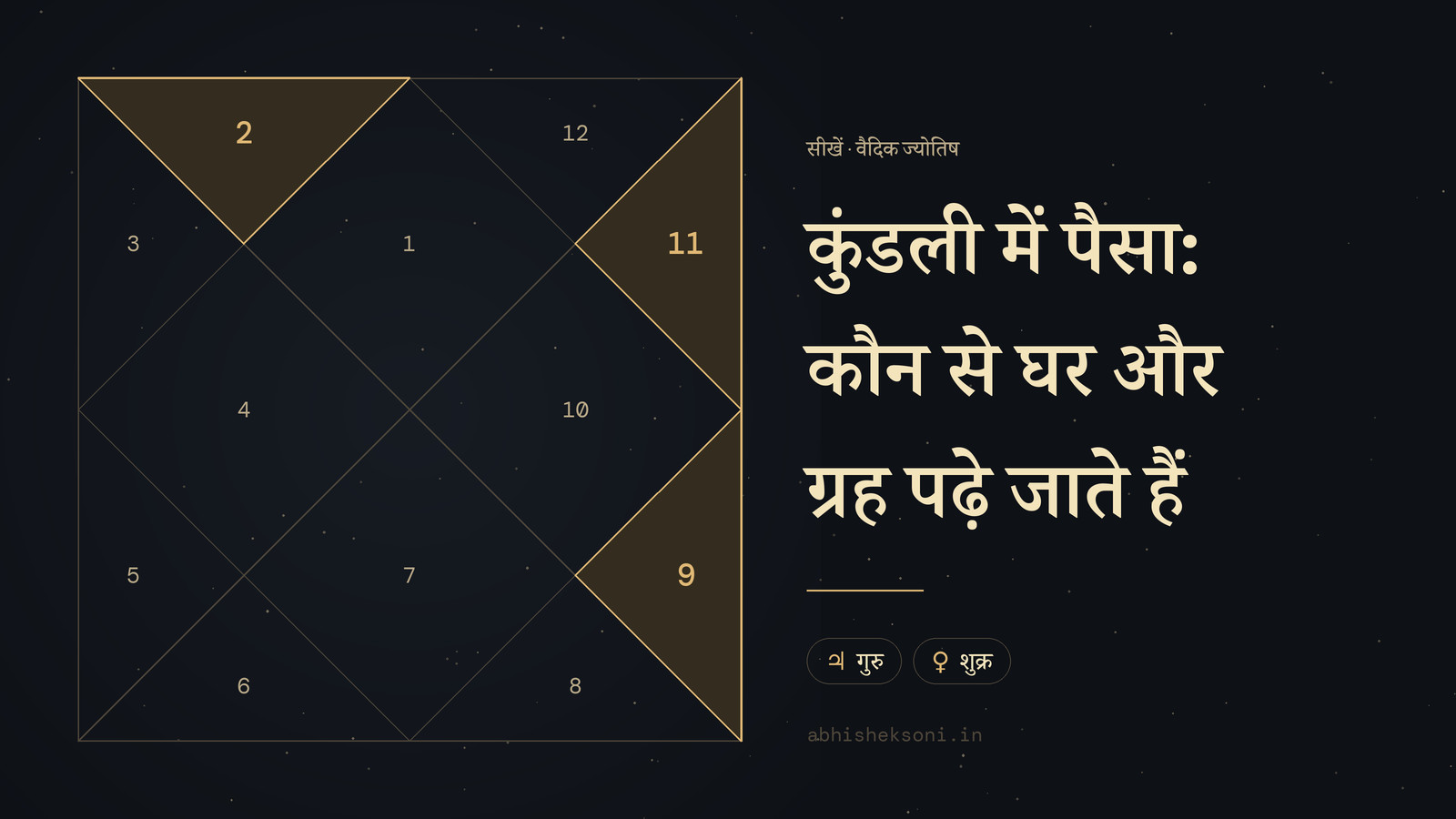
कुंडली में पैसा मुख्य रूप से तीन घरों से पढ़ा जाता है, दूसरे, ग्यारहवें और नौवें से, और ग्रहों में गुरु और शुक्र धन और आराम से सबसे करीब से जुड़े माने जाते हैं। कुंडली जो दिखाती है, वह पैटर्न है: पैसा आसानी से आता है या रुकावट के साथ, रुकता है या रिसता है, और जिंदगी के कौन से दौर पैसे के हिसाब से भारी हैं और कौन से हल्के।
जो नहीं दिखाती, वह रकम है। कोई ग्रह आपके बैंक बैलेंस पर राज नहीं करता, और कोई योग कोई आँकड़ा तय नहीं करता। इस पन्ने का पुराना रूप वादा करता था कि वह आपके आर्थिक भाग्य पर राज करने वाले ग्रहों का नाम लेकर धन का ताला खोल देगा, और यह बात दोनों हिस्सों में गलत है: कोई ग्रह पैसे पर राज नहीं करता, और पैसा कोई भाग्य नहीं है। जो आपको बताए कि कुंडली आदमी को अमीर बनाती है, उसने परंपरा बताना छोड़कर बेचना शुरू कर दिया है।
पैसे के तीन घर
दूसरा घर वह है जो आपके पास है। बचत, चीज़ें, परिवार की जायदाद, और वाणी और खाना भी, क्योंकि पुराने ग्रंथों में ये सब जमा होने के उसी घर में आते हैं। अच्छे सहारे वाला दूसरा घर उस पैसे का संकेत देता है जो रुकता है। दबाव में पड़ा दूसरा घर उस पैसे का जो आमदनी जो भी हो, जल्दी निकल जाता है।
ग्यारहवाँ घर फ़ायदा है: जो सच में आता है। आमदनी, लौटकर आने वाला पैसा, काम का फल, और जान पहचान भी, क्योंकि फ़ायदा अक्सर लोगों के रास्ते आता है। जब कोई कहता है कि कमाता अच्छा हूँ पर पास कुछ नहीं बचता, तो मैं यही घर देखता हूँ।
नौवाँ घर बड़े अर्थ में भाग्य है। किस्मत, पिता, गुरु, आस्था, लंबी लकीर। परंपरा से इसे उस खुशहाली के लिए पढ़ा जाता है जो सीधे कमाई हुई नहीं है, और उस सहारे के लिए जो आदमी के पीछे खड़ा है।
दो और घर किनारों पर मायने रखते हैं। बारहवाँ खर्च और नुकसान है, और जब यह पैसे वाले घरों से गहराई से जुड़ा हो तो आम तौर पर बाहर जाता पैसा दिखाता है, चाहे वह परिवार में जाए, किसी धंधे में, या विदेश। आठवाँ दूसरों का पैसा है: कर्ज़, विरासत, साझा पैसा, अचानक फ़ायदा और अचानक गड्ढे।
ग्रह
गुरु धन से सबसे ज़्यादा जुड़ा ग्रह है, और वैदिक परंपरा में उसका जुड़ना पैसे की तरह नहीं, फैलाव और पैसे के बारे में अच्छी समझ की तरह पढ़ा जाता है। अच्छी जगह बैठा गुरु आम तौर पर ऐसे आदमी का संकेत देता है जिसके पैसे को ऐसे फ़ैसलों का सहारा है जो बाद में ठीक निकलते हैं।
शुक्र आराम है, सुख, कीमत और वह सब जो पैसे से खरीदा जाता है। मज़बूत शुक्र को ऐसी जिंदगी के लिए पढ़ा जाता है जिसमें आराम हो, बड़ी आमदनी हो यह ज़रूरी नहीं।
बुध व्यापार, हिसाब और मोल भाव पर राज करता है, इसलिए उन कुंडलियों में मायने रखता है जहाँ पैसा खरीद बिक्री से आता है।
शनि गरीबी का ग्रह नहीं है, लोगों को चाहे जो बताया जाता हो। शनि धीमा जोड़ है। मज़बूत शनि के नीचे धन देर से बनता है, एक एक ईंट रखकर, और टिकता है।
राहु को बढ़ा चढ़ाने के लिए और ऐसे पैसे के लिए पढ़ा जाता है जो तेज़, चलन से हटकर या अस्थिर हो, और केतु को उससे विरक्ति के लिए। मंगल ज़मीन, मशीनों और शारीरिक मेहनत से आए पैसे के लिए, और पैसे का जोखिम उठाने की हिम्मत के लिए।
सूर्य और चंद्र यहाँ सीधे तौर पर कम मायने रखते हैं। चंद्र इस पर असर डालता है कि आदमी पैसे के बारे में महसूस कैसे करता है, और यह कोई छोटी बात नहीं है: पैसे की चिंता और पैसे की तंगी अलग चीज़ें हैं और कुंडली दोनों दिखाती है।
घर की हालत उसमें बैठे ग्रह से ज़्यादा मायने रखती है
खुद से कुंडली पढ़ने में यही हिस्सा अक्सर छूट जाता है।
दूसरा घर सिर्फ़ यह देखकर नहीं पढ़ा जाता कि उसमें कौन सा ग्रह बैठा है। देखा यह जाता है कि दूसरे घर का मालिक कहाँ गया है, किस हालत में है, और उस पर किसका असर है। जिस दूसरे घर में कुछ न बैठा हो, वह पूरी तरह सामान्य है और उससे कुछ बुरा नहीं निकलता। ज़्यादातर कुंडलियों में ज़्यादातर घर खाली होते हैं।
अगर ग्यारहवें का मालिक बारहवें में चला गया है, तो वह पैटर्न बात करने लायक है, क्योंकि फ़ायदा और बाहर जाना आपस में बँध गए। अगर दूसरे का मालिक मज़बूत और अच्छे सहारे में है, तो कुंडली मामूली आमदनी में भी रोककर रखने की क्षमता का संकेत देती है।
फिर वही बात, एक संकेत शोर है। तीन एक ही दिशा में इशारा करें तो रीडिंग है।
समय, जो ईमानदार हिस्सा है
पैसे पर कुंडली जो सबसे काम की चीज़ देती है, वह पैटर्न नहीं, कैलेंडर है।
महादशाओं का क्रम ग्रहों के लंबे दौर चलाता है, और पैसे के सवाल इस पर टिकते हैं कि कौन सा ग्रह चल रहा है और वह ग्रह आपकी अपनी कुंडली में क्या करता है। दूसरे या ग्यारहवें घर से जुड़े ग्रह का दौर आम तौर पर वह दौर होता है जब पैसा हरकत में आता है, किसी भी दिशा में। बारहवें से जुड़े ग्रह का दौर आम तौर पर ज़्यादा बाहर जाता पैसा दिखाता है, और अक्सर किसी वाजिब वजह से: घर खरीदना, धंधा, पढ़ाई, घर की कोई ज़िम्मेदारी।
यहीं रीडिंग सच में किसी के काम आ सकती है। लॉटरी का वादा करके नहीं, बल्कि यह कहकर कि अगले चार साल पैसे के हिसाब से तंग रहने की संभावना है, और यह सुझाकर कि आदमी इसे हमेशा का मानने के बजाय इसके लिए तैयारी करे।
परंपरा किस बात का साथ नहीं देती
यह धन की किसी पक्की तारीख का साथ नहीं देती। यह इस सोच का साथ नहीं देती कि कोई पत्थर या कोई अनुष्ठान पैसा पैदा कर देगा, और मैं वह बेचता नहीं। यह इस दावे का साथ नहीं देती कि कुंडली पढ़कर कोई शेयर, कोई जायदाद या धंधे का कोई साझेदार बताया जा सकता है।
इतना साथ ज़रूर देती है: कुछ कुंडलियाँ ऐसा पैसा दिखाती हैं जिसे देखभाल और ढाँचे की ज़रूरत है, कुछ ऐसा जो काफ़ी हद तक अपनी देखभाल खुद कर लेता है, और यह जानना कि आपके पास कौन सा है, कुछ कीमत रखता है। यह जानना भी कि मुश्किल दौर की कोई आखिरी तारीख है।
अगर आपका सवाल जमा पैसे के बारे में नहीं, काम के बारे में है, तो साथ का लेख कुंडली में करियर और धंधा (यह पन्ना अंग्रेज़ी में है) शुरू करने की बेहतर जगह है। अगर आप कुंडली ठीक से पढ़वाना चाहते हैं, तो रीडिंग यही करती है।
लोग जो पूछते हैं
क्या कोई योग है जो आदमी को अमीर बना दे?
ऐसे योग हैं जिन्हें परंपरा खुशहाली से जोड़ती है, जिन्हें मिलाकर धन योग कहते हैं, और इनमें आम तौर पर पैसे वाले घरों के मालिक एक दूसरे का साथ देते हैं और गुरु अच्छी जगह बैठा होता है। पर ये आम आर्थिक जिंदगी वाली बहुत सी कुंडलियों में मिलते हैं, क्योंकि योग क्षमता का संकेत देता है और क्षमता को हालात, मेहनत और समय से मिलना पड़ता है। वादे की तरह पढ़े गए इन योगों ने बहुत सी निराशा दी है।
पैसे के लिए कौन सा रत्न पहनूँ?
मैं पैसे के लिए रत्न नहीं बताता। परंपरा में जहाँ रत्न सुझाया जाता है, वह किसी खास कुंडली में किसी ग्रह को बल देने से जुड़ा है, किसी आर्थिक नतीजे से नहीं, और यह चलन इस हद तक धंधा बन चुका है कि अब ज़्यादातर बेचने का रास्ता है। अगर कोई आपकी कुंडली पढ़ने से पहले रत्न की कीमत बता दे, तो वही बताता है कि वह मुलाक़ात किस लिए थी।
मेरी कुंडली पैसे के लिए बहुत अच्छी पढ़ी गई थी और मेरी हालत तंग है। गलत कौन है?
आम तौर पर कोई नहीं, और आम तौर पर रीडिंग अधूरी थी। कुंडली दूसरे और ग्यारहवें में सच्ची क्षमता दिखा सकती है और फिर भी ऐसा दौर चल रहा हो सकता है जो उसे सालों तक दबाए रखे। क्षमता और समय दो अलग रीडिंग हैं और दोनों साथ हों तभी किसी मतलब की हैं। समय पूछिए, और पूछिए कि अभी का दौर कब खत्म होता है।
स्रोत
- कुण्डली, विकिपीडिया
- बृहत्पाराशर होराशास्त्र, हिंदी टीका सहित, Internet Archive
- बृहस्पति (ज्योतिष), विकिपीडिया